research
Research problems I have formulated and investigated in multi-robot control, autonomous-vehicle safety validation and learning-based coordination.
Rule-Constrained Adversarial Scenario Generation
Developed a feasibility-aware reinforcement learning framework for autonomous-vehicle safety validation. By constraining non-ego agent behaviors through feasibility learning, the framework generates realistic, safety-critical adversarial scenarios while significantly curbing unrealistic traffic-rule violations.
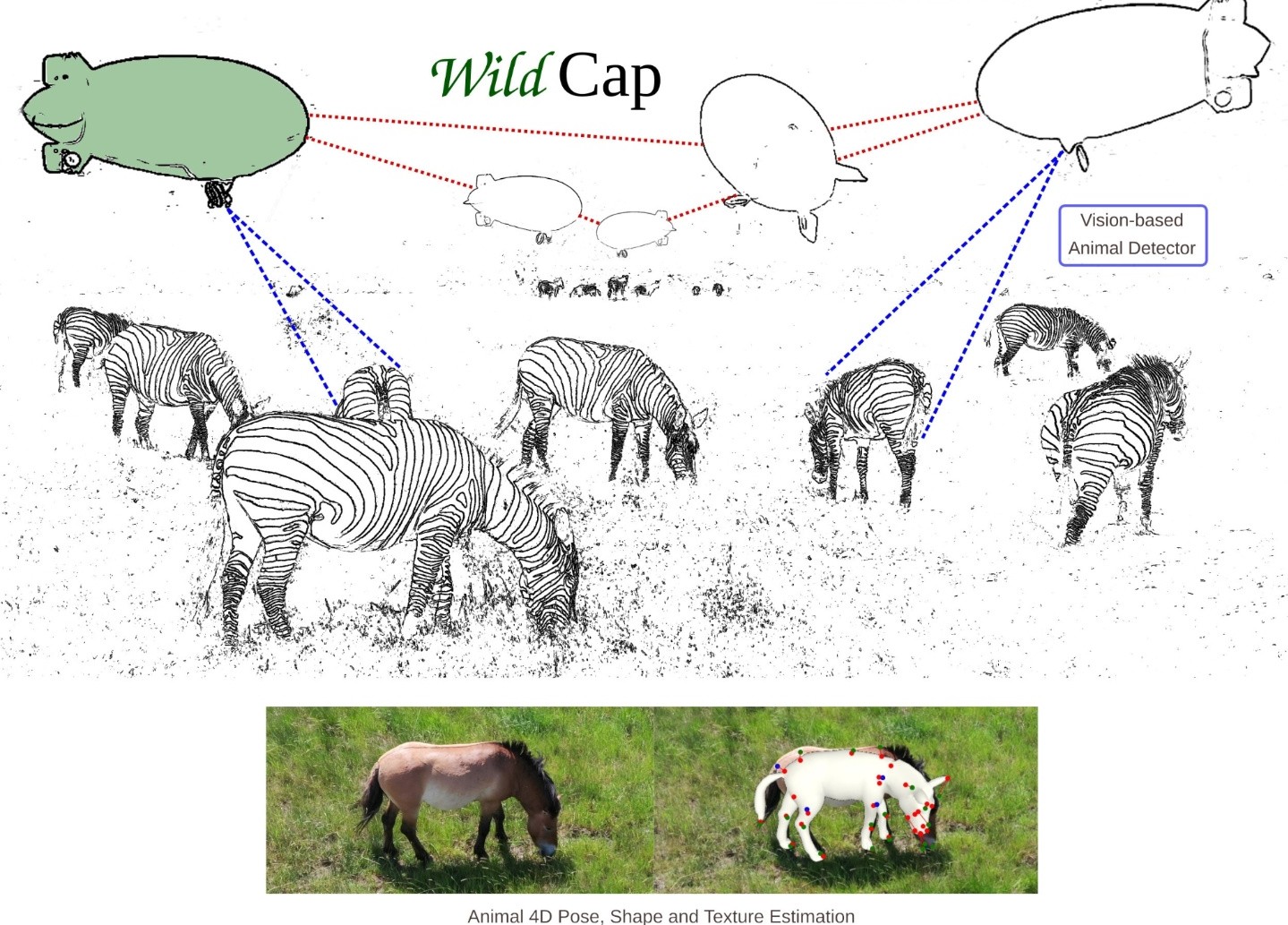
Synthetic Database Creation and Active Viewpoint Selection for Zebra Re-Identification
Uncertainty-guided active perception and UV texture completion for 3D animal reconstruction.
Investigating synthetic database creation from 2D zebra image datasets to facilitate accurate animal re-identification. The thesis addresses core challenges in multi-view UV texture mapping, representing uncertainty across the UV texture map, and learning active viewpoint policies (single- and multi-agent) that dynamically query database views based on texture uncertainty to complete the full 3D animal reconstruction.
Safety and Connectivity Certificates for Finite-Time Formation Transitions
Formulated a hybrid distributed control framework for multi-robot swarms that decouples centroid tracking from formation geometry. Derived analytical proofs for global exponential formation convergence and Input-to-State Stability (ISS) under bounded disturbances via finite-time sliding-mode control.